Today I’m doing an honest Fibre Optic vs Traditional Broadband comparison, to help my readers choose what’s best for them and their family. Before I go on, I want to be crystal clear in the fact that speeds and availability are subject to coverage in your area, so it’s always best to check your own postcode, rather than taking any speeds you see online as valid for your address.
Now I’ve cleared that up, let’s get into this Fibre Optic vs Traditional Broadband comparison. I figured it was best to start by explaining the difference between them.
Fibre Optic vs Traditional Broadband – What’s The Difference?
Fibre optic broadband is a network of underground cables, which usually offers the fastest service. That said, it’s not available everywhere, so you must check if your area is covered. Most new-build homes have Fibre Optic Broadband cables installed at the same time the new roads and paths are laid. Older homes may not have it though, as it can be expensive to install.

Traditional Broadband (or ADSL Broadband) enters your home via the landline phone line. This tends to be available in older properties, and doesn’t offer the high speed service which fibre optic cable does. You also have to pay line rental to the phone line operator as well as paying for your broadband service to the broadband provider, so it can be more expensive.
Which is Best for Me?
Now you know the differences between fibre optic vs traditional broadband, it’s time to work out which is best for your household. Before you do this, you should work out your household’s maximum usage at any one time, so you know which plans to consider.
To do this, consider how many devices your household can be using simultaneously. (That could be any of the following: Computers, mobile phones, consoles, Alexas, wireless home security devices, laptops, iPads, tablets, kindles, Smart TVs, etc.) Now you know that, you should be able to work out which speed you need.
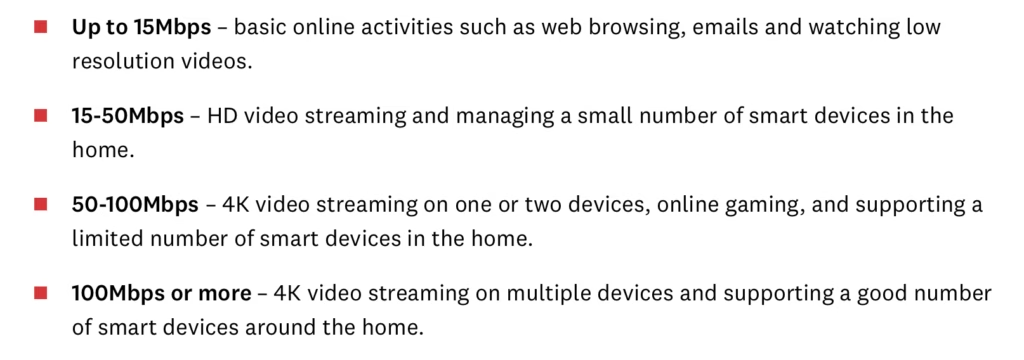
I personally believe you should try to have 75mbps per person, as a minimum if the person streams online and hates buffering. (They could be watching a smart TV, watching videos on their gadgets or gaming). I have 350mbps at home, and that is able to comfortably handle 8x devices all streaming simultaneously. (That includes things like the ring doorbell, CCTV cameras, Alexas, 2x smart TVs and iPads all being used at the same time).
Now you know what speed you need, it’s time to have a look for the best full fibre broadband offers in your area.
Best Prices
Remember to check the small print as some companies promote their service’s maximum speed, when in reality that’s only available to a small percentage of customers in a specific area. There’s usually a box to enter your postcode to check for coverage in your area – make sure you do that.
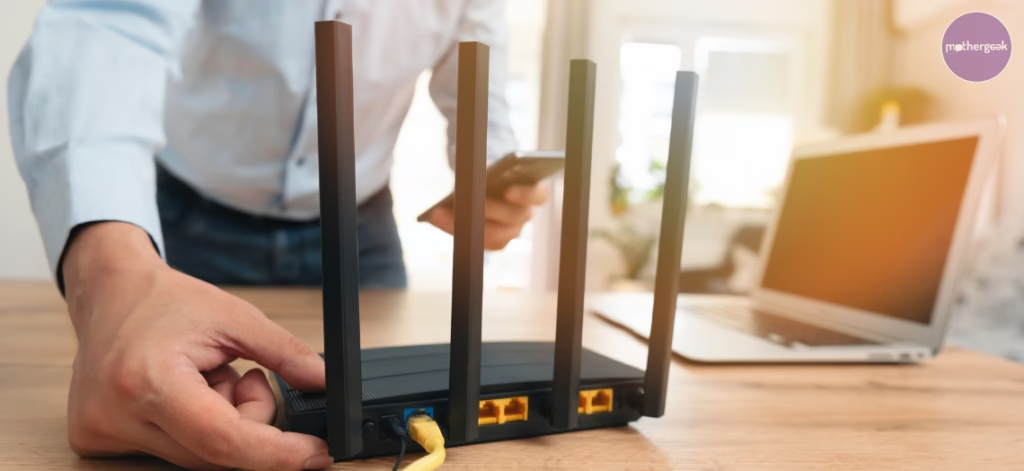
Make a list of the available services in your area, their speed and the price. Also check the minimum term so you know how long you’ll be tied in to the contract. Using this information, you should be able to work out which plan and broadband type is best for you. If you already pay for a BT Landline and just want to add basic internet, traditional broadband is likely your best option.
For most households though, fibre optic broadband is usually the best option. In most instances, it’s faster, more reliable and better value. If you live in a rural area, this may not be an option for you though.
My current home is a 1950s Semi in the Manchester suburbs. Fibre optic cable was installed around here in the late 199os, and it’s been the best service since then. A storm took down our BT phone lines around 15 years ago, and because my address wasn’t a customer at the time, they didn’t reinstall the BT phone line.
When I moved here, I asked BT about installing one, and they wanted £350 just to put the line back in, so for me, fibre optic broadband is by far the best value. So now you should understand the differences between Fibre Optic vs Traditional Broadband and know how to decide which best meets your needs.